Best Products UK
In-depth review · 10 products ranked

Best Drones of 2026

Last reviewed 19 May 2026 by Best Products UK Editorial Team

Buying a drone in the UK now means two questions: how good is the camera, and does it stay under the 250 g registration line? The CAA's rules treat anything over 250 g as a regulated aircraft requiring an Operator ID, a Flyer ID test and labelling. Sub-250 g drones skip almost all of that. This ranking picks the best in both categories.

BP
Best Products UK Editorial Team
Editorial team
Published 30 April 2026
8 min read
Advertisement. As an Amazon Associate, Best Products UK earns from qualifying purchases. This article contains affiliate links. If you buy a product through one of these links, we earn a commission from the retailer at no extra cost to you. Our ranked picks are made independently of these commercial arrangements — read how we rank and our full affiliate disclosure. Prices on Amazon change frequently — always click through to verify the current price before buying.
At a glance

The 3 picks worth skipping ahead for

How we tested

Best Products UK is a review aggregator, not a test lab. For this guide we read Amazon UK customer reviews focused on real-world wind tolerance, signal stability and battery life; cross-referenced against DC Rainmaker, RTINGS and DPReview testing; and weighted long-term ownership signals (motor lifespan, gimbal drift, firmware updates) more heavily than first-flight impressions. UK regulatory categories (A1/A2/A3, Open category, sub-250 g) are referenced against current CAA guidance at time of writing.

Jump to a pick
Best Choice
01
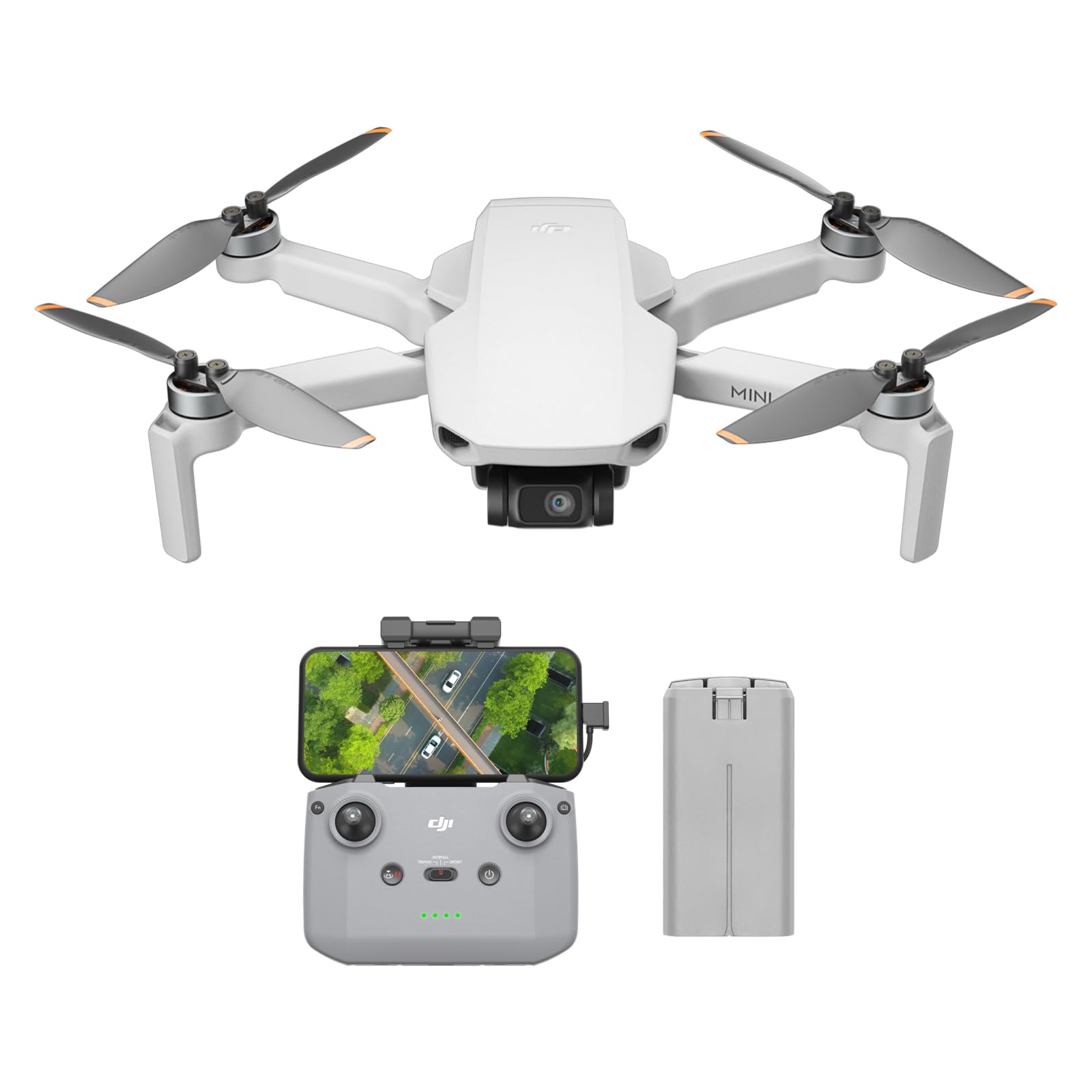
DJI Mini 4K Fly More Combo
DJI

Mini 4K Fly More Combo

9.4
/ 10
Excellent

DJI's flagship travel drone in the Fly More bundle — three batteries, charging hub, spare props and shoulder bag. Sub-249 g means minimal CAA paperwork. 4K/30 fps video on a 3-axis mechanical gimbal is the entry point for genuinely usable aerial content.

Why we love it
  • Sub-249 g — no Flyer ID test required
  • 3 batteries = ~90 min total flight
  • 10 km OcuSync transmission range
  • 3-axis mechanical gimbal
Watch out for
  • Premium price (camera-grade kit)
  • Smartphone required as screen
  • Wind affects flight in open coastlines
Weight
<249 g
Camera
4K/30 fps, 1/2.3-inch sensor
Flight time
~31 min per battery
Range
10 km OcuSync
In box
3 batteries, hub, bag, props
Premium Pick
02
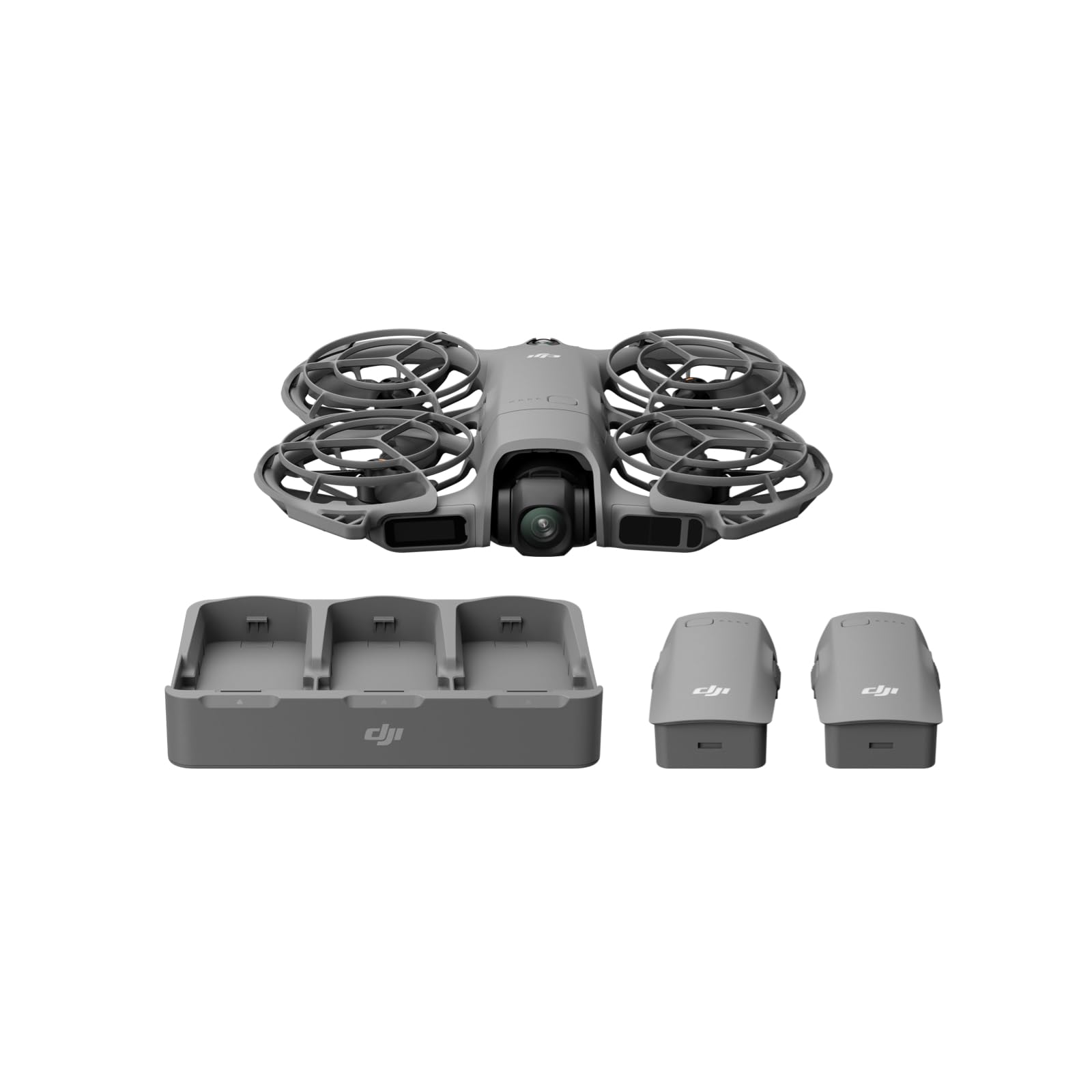
DJI Neo 2 Fly More Combo
DJI

Neo 2 Fly More Combo

9.2
/ 10
Excellent

The most innovative sub-249 g drone on the market in 2026. Palm-launch (literally throw it up and it stabilises), AI subject tracking that follows you without a controller, and 4K video. The price is high but no other drone offers solo-creator workflow this clean.

Why we love it
  • Palm-launch, no controller needed for tracking
  • AI subject-tracking is genuinely usable
  • Sub-249 g category
  • Compact for travel
Watch out for
  • Premium-tier price for compact form factor
  • Smaller batteries — fewer minutes per flight
  • Newer product, parts ecosystem still building
Weight
~135 g
Camera
4K/60 fps
Flight time
~18 min per battery
Launch
Palm or controller
Tracking
AI subject
03
DJI Mini 4K Camera Drone Combo
DJI

Mini 4K Camera Drone Combo

8.7
/ 10
Very Good

A different bundle configuration of the Mini 4K — usually includes two batteries instead of three, slightly different accessories. Functionally identical to the Fly More Combo at #1 but at a lower price point if you don't need the full kit.

Why we love it
  • Same Mini 4K chassis as #1
  • Lower entry price than Fly More
  • 10 km OcuSync 2.0 transmission
  • Sub-249 g category
Watch out for
  • Fewer batteries than #1 (typically 2)
  • Carry case may be smaller
  • Resale value lower than full kit
Weight
<249 g
Camera
4K/30 fps
Flight time
~31 min per battery
Range
10 km OcuSync 2.0
In box
2 batteries (varies)
Value for Money
04
DJI Mini 4K (Standard Kit)
DJI

Mini 4K (Standard Kit)

8.6
/ 10
Very Good

The cheapest way into the DJI Mini 4K ecosystem. Single battery, controller, basic prop guards. For first-time DJI buyers who want to test the platform before committing to a Fly More kit, this is the right step in.

Why we love it
  • Lowest entry point to DJI Mini 4K
  • Same camera and gimbal as Fly More
  • Sub-249 g — no Flyer ID needed
  • Upgradeable to multi-battery later
Watch out for
  • Single battery = ~30 min flight time
  • No shoulder bag in box
  • Spare batteries add up fast (£60+ each)
Weight
<249 g
Camera
4K/30 fps
Flight time
~31 min
Batteries
1 (kit)
Range
10 km
05
DJI Neo (First-Gen 4K UHD)
DJI

Neo (First-Gen 4K UHD)

8.4
/ 10
Good

The original Neo before the Neo 2 — less refined AI tracking but the same featherweight, palm-launch design. Now usually discounted vs the Neo 2 because of the newer model's existence; still a credible buy for hobbyists.

Why we love it
  • 135 g featherweight, palm-launch
  • 4K UHD video
  • GPS positioning
  • Often discounted vs Neo 2
Watch out for
  • Older AI tracking is less reliable than Neo 2
  • Battery technology a generation behind
  • DJI may end firmware updates earlier
Weight
~135 g
Camera
4K UHD
Flight time
~17 min
Launch
Palm or controller
GPS
Yes
How to choose

Weight, camera and the UK CAA rulebook

Three decisions cover almost every drone buying mistake. Get them right in order.

1.
Under or over 250 g

The 250 g line is the single biggest factor in UK drone buying. Under 250 g (DJI Mini, Neo): you need only a free Operator ID (£11/year), no Flyer ID test, and can fly in most parks and public spaces respecting bystander distances. Over 250 g: full Operator ID + Flyer ID + visible label, and stricter A1/A2/A3 distance rules. For 95% of hobbyist use, sub-250 g is the smart category.

2.
Camera: 4K vs 1080p vs 'HD'

4K (3840×2160) is the threshold for usable YouTube/Instagram content. 1080p Full HD is fine for personal viewing but won't survive social media re-compression well. Anything sold as 'HD' without a resolution number is sub-1080p marketing-speak and almost certainly poor quality. Stabilisation matters more than resolution — a 1080p drone with a mechanical gimbal (DJI) beats a 4K drone with electronic-only stabilisation.

3.
Range, wind tolerance and battery

Manufacturer range figures are measured in clear-air, line-of-sight conditions; real-world is half that on a typical day. Wind tolerance is critical in the UK — sub-100 g toys can't handle a moderate breeze, while sub-249 g DJI drones cope with around 38 km/h winds. Battery life: 25–30 minutes is the real-world DJI standard; toy drones often deliver 6–8 minutes in practice.

If you'll fly more than once a month, spend on a DJI sub-249 g drone — the camera and regulatory simplicity pay back fast. If it's a Christmas gift or a one-trip purchase, a Holy Stone HS290 covers the basics without overspend.

06
Generic GPS Drone with 4K UHD Camera (RC Quadcopter)
Generic

GPS Drone with 4K UHD Camera (RC Quadcopter)

8.1
/ 10
Good

A generic GPS quadcopter at the mid-budget tier — '4K UHD' branding is more aspiration than reality (real output is closer to interpolated 1080p), but the GPS module gives reliable hover and return-to-home, which the cheaper picks lack.

Why we love it
  • GPS return-to-home
  • Stable hover for static shots
  • Often includes 2 batteries
  • Mid-budget pricing
Watch out for
  • '4K' is digitally interpolated, not native
  • No mechanical gimbal — wobble visible
  • Generic brand support pattern
Weight
~200–250 g (varies)
Camera
'4K UHD' (interpolated)
Flight time
~25 min (claimed)
GPS
Yes
Return-to-home
Yes
07
Holy Stone HS290 Foldable Beginner Drone with 1080P FPV Camera
Holy Stone

HS290 Foldable Beginner Drone with 1080P FPV Camera

7.7
/ 10
Good

Holy Stone is the best-supported sub-£100 beginner brand on Amazon UK — actual parts (replacement props, motors) are buyable, and the firmware updates regularly. 1080p FPV camera is honest about its category (not pretending to be 4K).

Why we love it
  • Genuine UK brand support
  • Honest 1080p camera spec
  • Foldable for travel/storage
  • Beginner-friendly altitude hold
Watch out for
  • FPV-only — not a serious camera
  • Battery life ~10 min realistic
  • Wind sensitive
Weight
~100 g
Camera
1080p FPV
Flight time
~10 min
GPS
No
Range
Wi-Fi, ~80 m
08
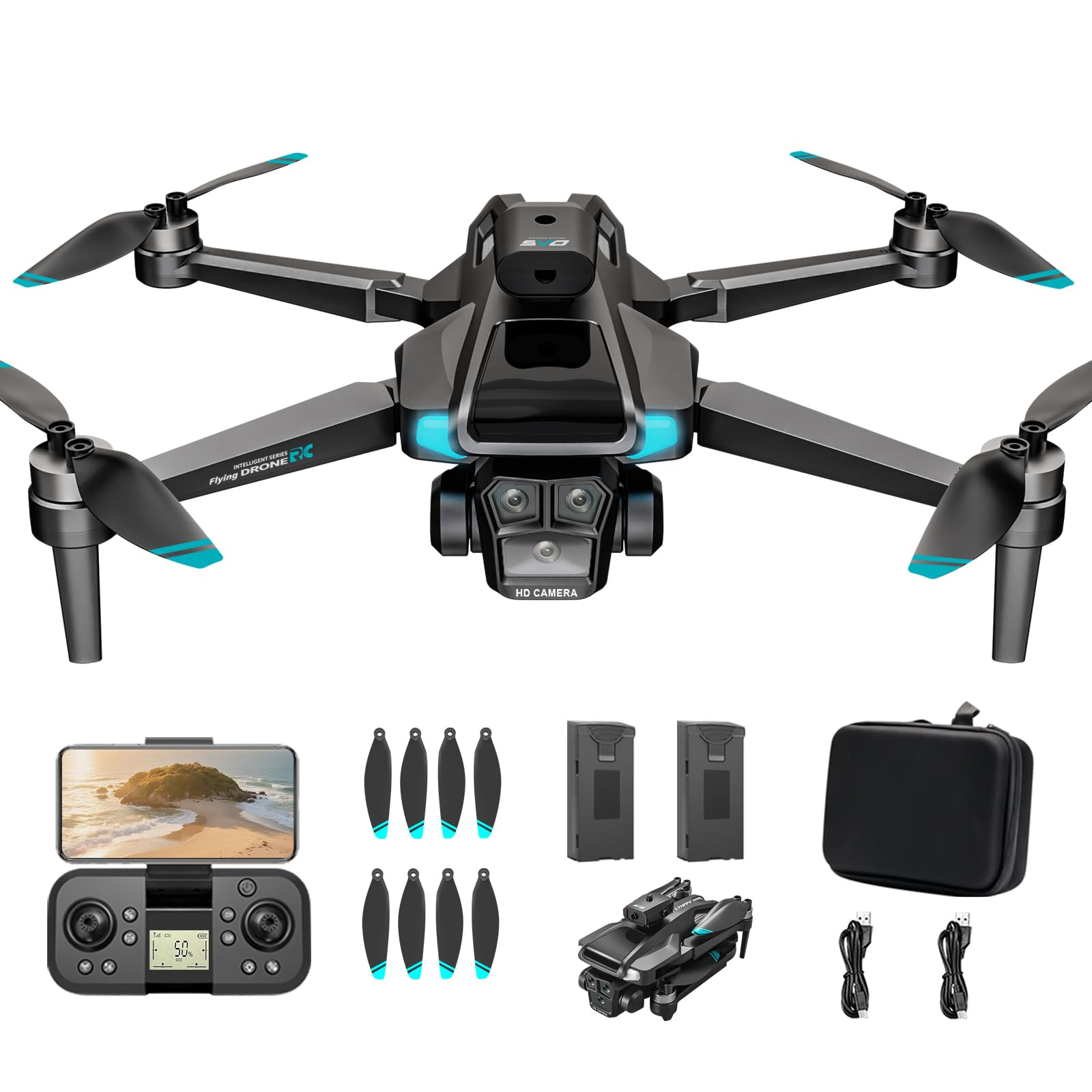
Generic Foldable Wi-Fi Mini Quadcopter (4K, Brushless, Dual Cam)
Generic

Foldable Wi-Fi Mini Quadcopter (4K, Brushless, Dual Cam)

7.5
/ 10
Good

Sub-budget '4K' drone with the standard generic feature list (brushless motors, dual cameras, gesture selfies). The brushless motors are the real advantage at this price — longer motor life than brushed equivalents. Treat the camera spec as a hopeful estimate.

Why we love it
  • Brushless motors — longer life
  • Dual cameras for selfies
  • Gesture controls
  • Sub-£50 entry
Watch out for
  • '4K' marketing is generous
  • 40 min flight time is total of 2 batteries
  • Limited brand support
Weight
Under 100 g
Camera
'4K' interpolated dual
Motor
Brushless
Flight time
~20 min per battery
Gestures
Yes
09
Wipkviey T28 Beginner Drone with Camera
Wipkviey

T28 Beginner Drone with Camera

7
/ 10
Fair

Wipkviey T28 — a kids/beginner drone with crash-resistant prop guards and one-key takeoff/landing. Genuinely designed for first flights and indoor use; don't expect aerial photography but expect it to survive multiple crashes.

Why we love it
  • Designed for kids/first flights
  • Crash-resistant prop guards
  • One-key takeoff/landing
  • Sub-£50
Watch out for
  • Camera is basic (480p typical)
  • Limited outdoor capability
  • Battery 6–8 minutes
Weight
<100 g
Camera
Basic VGA
Flight time
~7 min
Prop guards
Included
Suitable for
Indoor / beginners
Editor's Pick
10
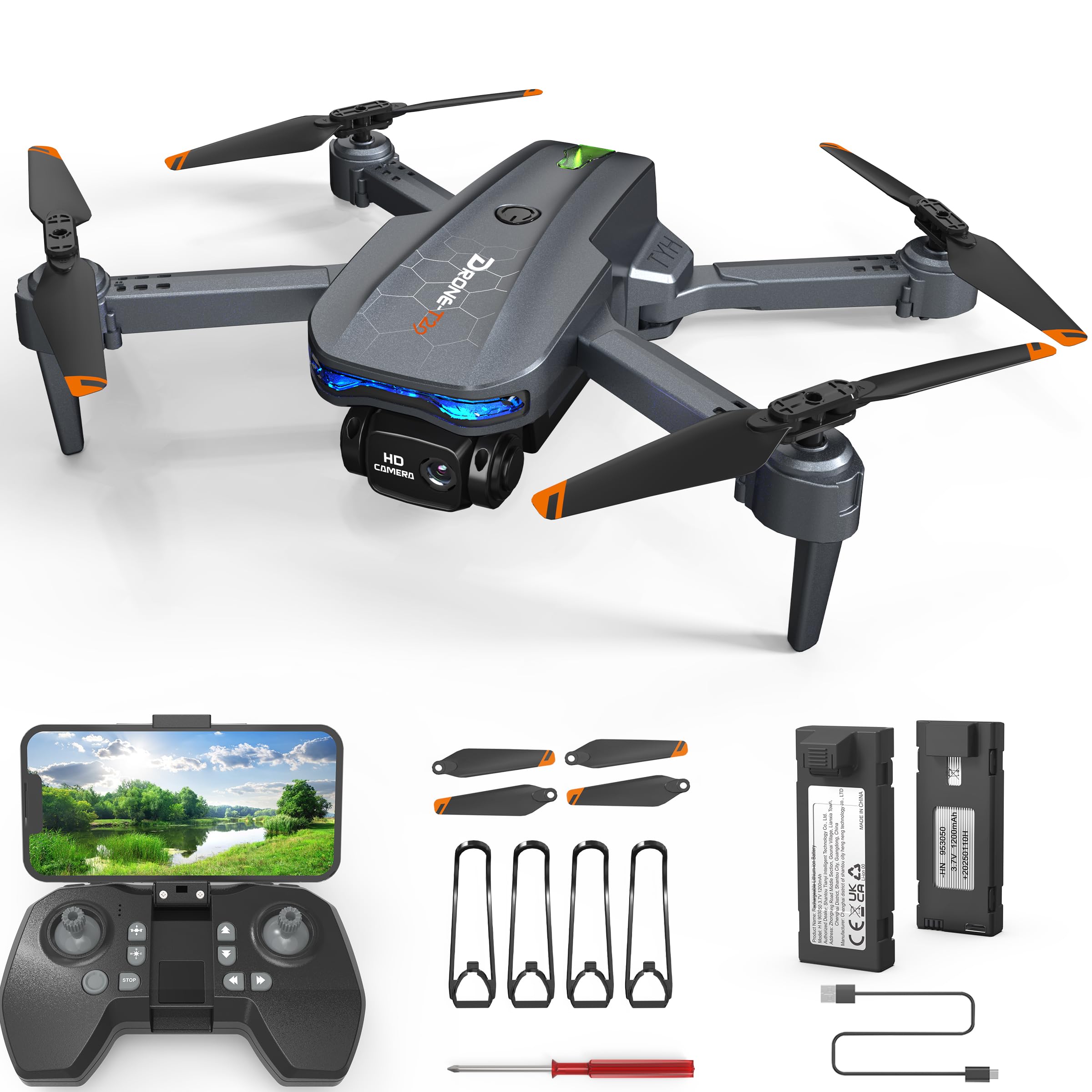
FERIETEL T29 C0 Mini Foldable Drone (1080P)
FERIETEL

T29 C0 Mini Foldable Drone (1080P)

6.9
/ 10
Fair

FERIETEL's sub-budget foldable drone — a credible first-drone gift at the lowest price tier. C0 classification puts it firmly in the lowest UK regulatory category (under 250 g, low energy). Don't expect more than a few minutes of clip-worthy footage.

Why we love it
  • C0 class — fewest UK restrictions
  • Foldable, ~£40 price tier
  • 1080p camera (honest spec)
  • Lightweight, kid-friendly
Watch out for
  • Generic brand support
  • Battery life ~8 min
  • Wind sensitive
Class
C0 (UK CAA)
Weight
<100 g
Camera
1080p
Flight time
~8 min
Foldable
Yes
The verdict

DJI's Mini 4K Fly More Combo wins overall; the Neo 2 is the AI-tracking specialist.

The DJI Mini 4K Fly More Combo takes the top spot for the same reason DJI has dominated the consumer market for a decade: it just works. Sub-249 g (no CAA registration required), genuine 4K video, 10 km transmission range and the multi-battery bundle that turns 30 minutes of flight into 90. For travel photography it's the default benchmark.

The newer DJI Neo 2 is the most interesting alternative in 2026 — it's palm-launchable, can track a subject with AI without any controller input, and weighs around 135 g. For solo creators making selfie-tracking content (or anyone whose hands are full of skiing/cycling gear), this is the right buy even at a premium.

Below the DJI tier, the picture is honest: most sub-£100 'beginner drones' are toys that fly for 8 minutes, have FPV cameras you wouldn't post the footage from, and crash apart on contact. They have a place — first-drone learning, indoor flying with kids — but treat them as disposable, not as cameras. The Holy Stone HS290 is the most credible budget pick because Holy Stone has a real UK support footprint.

Frequently asked

Common questions

Do I need to register a drone with the CAA?
If your drone weighs over 250 g OR has a camera (regardless of weight, in most cases): yes. You need an Operator ID (£11/year, online registration) and a Flyer ID test (free online multiple-choice). Some toy drones below 250 g without a camera are exempt, but anything in this list with a camera requires at least an Operator ID.
Can I fly a drone in UK parks?
Yes for sub-250 g drones with a few exceptions: many Royal Parks ban drones outright, and local-authority parks vary. Always check council bylaws. National Parks generally require permission. For sub-249 g drones following A1 rules (no closer than 50 m to uninvolved people), most general public space outside London is legal.
What's the actual difference between £40 and £500 drones?
Camera quality (mechanical gimbal vs none), transmission range (10 km vs 80 m), wind tolerance (steady up to 38 km/h vs blown around in any breeze), and battery life (30 min vs 8 min). For YouTube/Instagram content, you need the DJI tier; for first-flight learning, a £40 drone is fine.
Sub-249 g — is it really enough drone?
Yes for 95% of consumer use. DJI's sub-249 g lineup carries the same camera technology as their larger Mavic series but with smaller batteries and lighter chassis. The only categories where you outgrow them are professional cinematography (need bigger sensors) or heavy wind environments.
Are drone batteries safe to fly with?
Lithium-polymer drone batteries must travel in carry-on luggage (not checked baggage) on UK flights, with terminals taped or in original packaging. Most airlines limit to 100 Wh per battery; consumer drones (DJI Mini, Neo) are well under this. Spare batteries: typically a 2-battery limit per passenger on most airlines.
BP
About the editor

Best Products UK Editorial Team

Best Products UK is an independent UK product-review aggregator. Our editorial team synthesises hands-on reviews from leading UK consumer publications — Which?, Wired UK, T3, Tom's Guide UK, Trusted Reviews, TechRadar, Good Housekeeping, Expert Reviews, Stuff and others — into clear, ranked top-ten guides for UK shoppers. We do not run a physical test lab. We tell you which products UK reviewers agree on, where they disagree, and which the data says is right for your budget. Our methodology is published openly at /about/#methodology.