Best Products UK
In-depth review · 10 products ranked

Best Electronic Keyboards of 2026

Last reviewed 19 May 2026 by Best Products UK Editorial Team

Buying an electronic keyboard is mostly a question of how serious the player will get. 61 keys is enough for years of beginner-to-intermediate learning; 88 keys (full piano range) matter only if the player will eventually move to classical piano repertoire. The trap is buying a £40 light-up-key keyboard that turns the learner off within months because the sound is poor. This ranking weighs Yamaha and Alesis-tier sound quality over feature counts.

BP
Best Products UK Editorial Team
Editorial team
Published 30 April 2026
7 min read
Advertisement. As an Amazon Associate, Best Products UK earns from qualifying purchases. This article contains affiliate links. If you buy a product through one of these links, we earn a commission from the retailer at no extra cost to you. Our ranked picks are made independently of these commercial arrangements — read how we rank and our full affiliate disclosure. Prices on Amazon change frequently — always click through to verify the current price before buying.
At a glance

The 3 picks worth skipping ahead for

How we tested

Best Products UK is a review aggregator, not a test lab. For this guide we read Amazon UK customer reviews focused on sound-engine quality (the gulf between a Yamaha sample library and a generic-brand sample), key feel (touch-sensitive vs unweighted), and longevity of the included stand/bench/sustain pedal where bundled; cross-referenced against MusicRadar, Pianist Magazine and Yamaha/Roland teaching forum recommendations. Yamaha is the reference brand for beginner keyboards because their sound engine is dramatically better than the price tier suggests; competitors are evaluated against Yamaha standards.

Jump to a pick
Best Choice
01
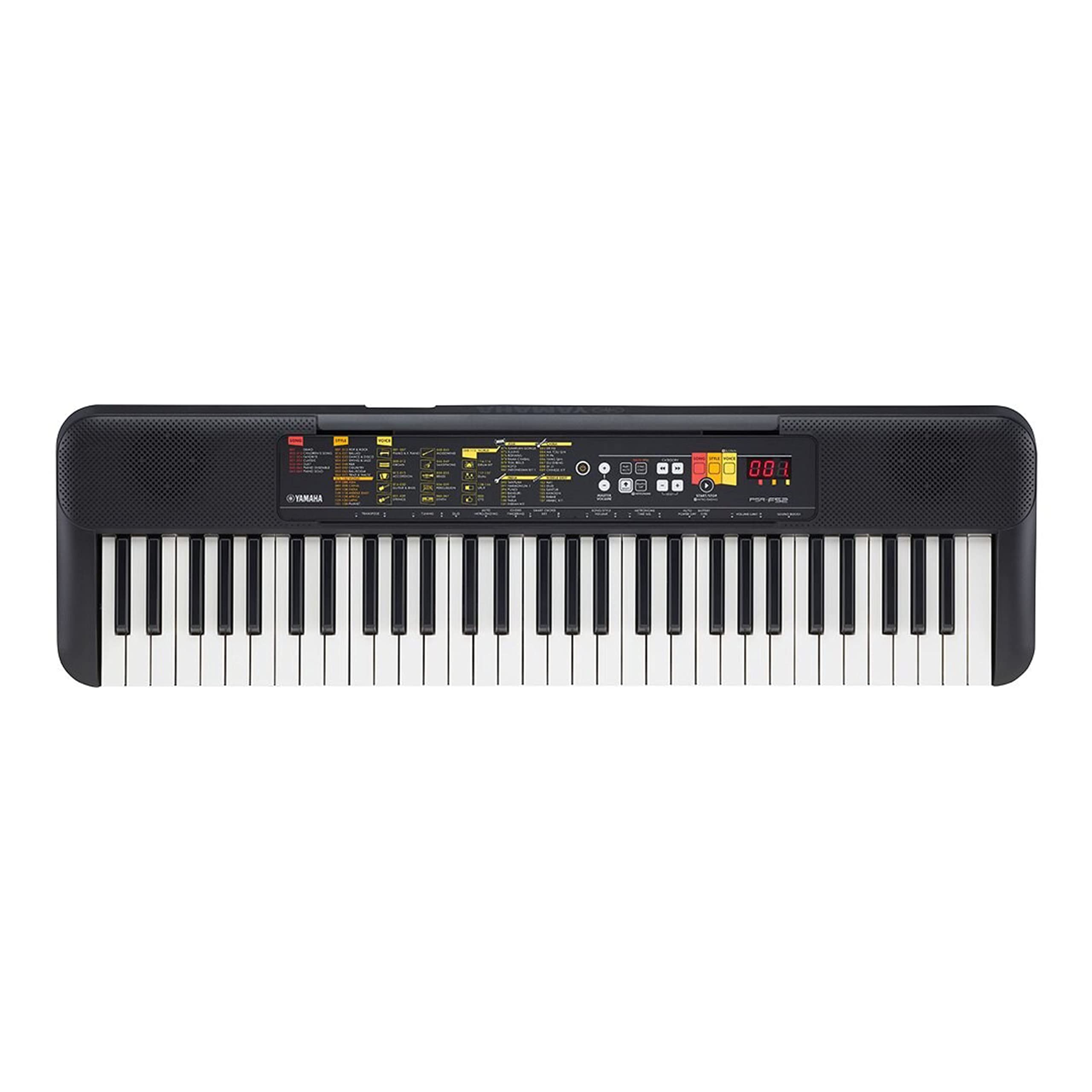
Yamaha PSR-F52 Compact Digital Keyboard (61 Keys, Beginner)
Yamaha

PSR-F52 Compact Digital Keyboard (61 Keys, Beginner)

9.5
/ 10
Exceptional

Yamaha's entry-level digital keyboard. 61 keys (not touch-sensitive), built-in speakers, Yamaha-tier sound engine. The sound quality alone makes this the right first keyboard at sub-£100.

Why we love it
  • Yamaha sound engine (industry-best at price)
  • 61 full-size keys
  • Built-in speakers
  • Easy first-keyboard learning
Watch out for
  • No touch sensitivity (limiting once past beginner)
  • No headphone jack on base model
  • No included stand/bench
Keys
61 (full-size, non-weighted)
Touch sensitivity
No
Voices
114
Brand
Yamaha
Price
Sub-£100
Premium Pick
02
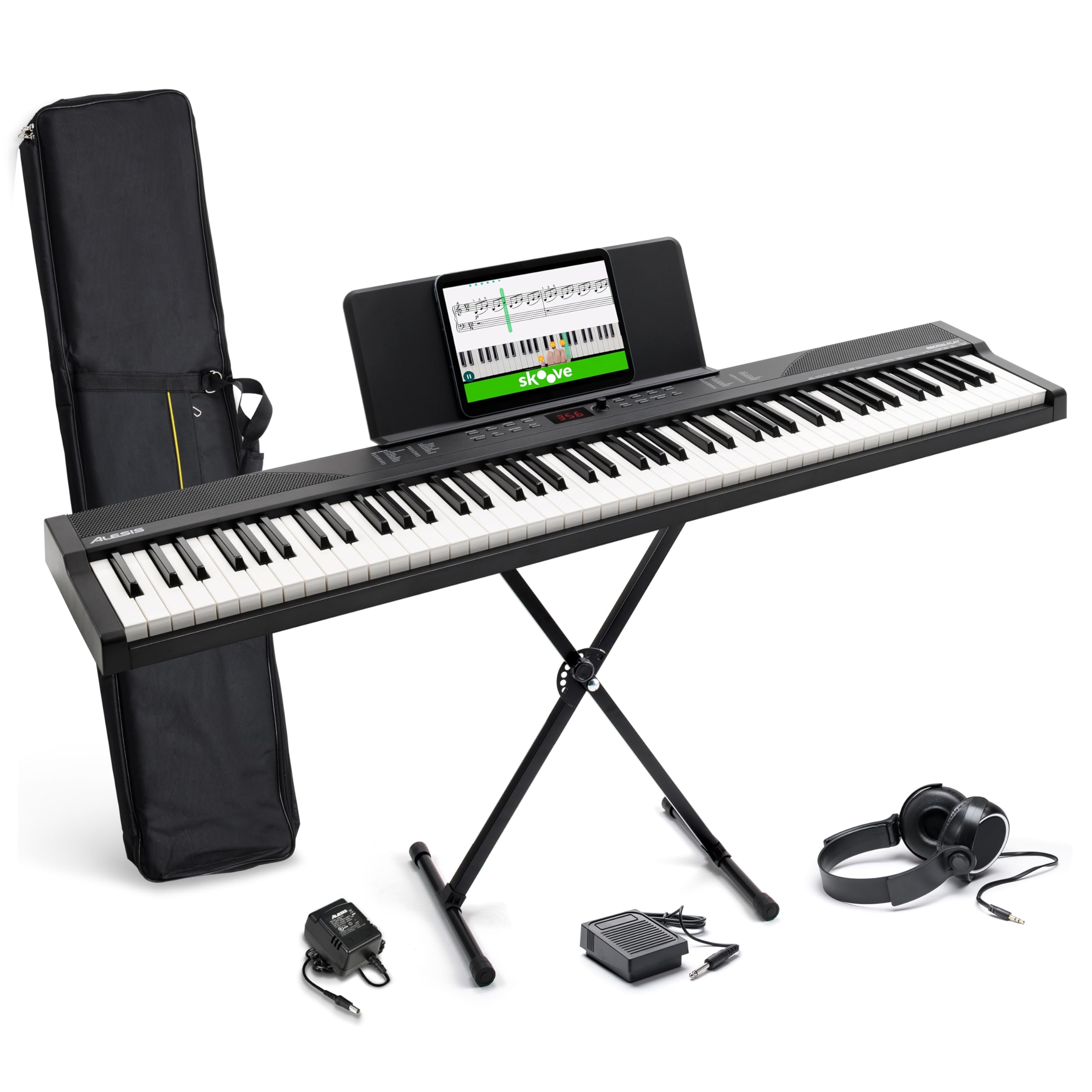
Alesis 88-Key Digital Piano (480 Sounds, USB MIDI)
Alesis

88-Key Digital Piano (480 Sounds, USB MIDI)

9.2
/ 10
Excellent

Alesis 88-key digital piano — full piano range, semi-weighted keys, 480 sounds. USB MIDI for connecting to recording software. Carry case included on some bundles. The right step for learners committed to piano specifically.

Why we love it
  • Full 88-key piano range
  • Semi-weighted keys (touch sensitivity)
  • USB MIDI for recording software
  • 480 sound library
Watch out for
  • Premium pricing (£150+)
  • Less polished sound vs Yamaha
  • Heavier (~7 kg)
Keys
88 (semi-weighted)
Touch sensitivity
Yes
Voices
480
USB MIDI
Yes
Brand
Alesis
03
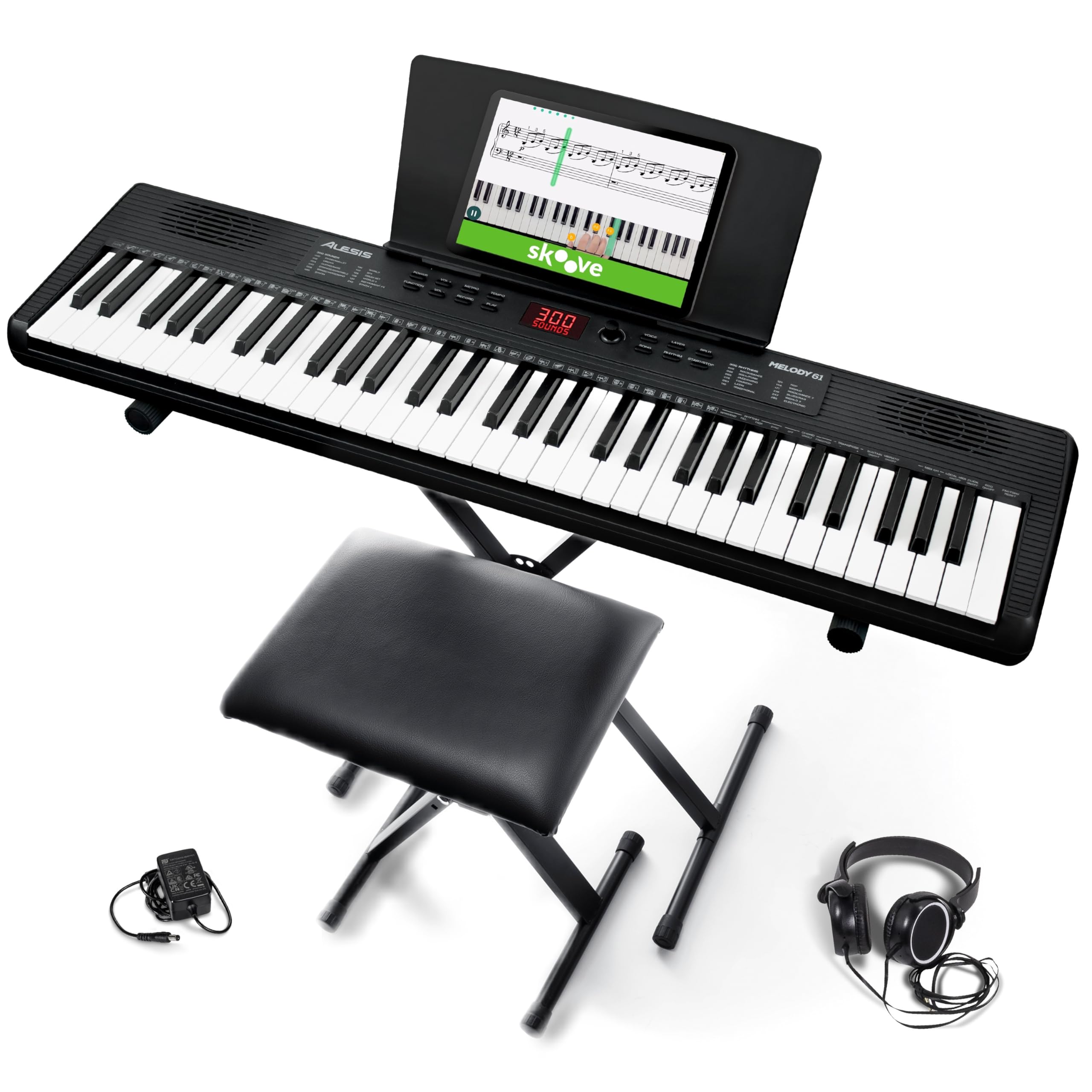
Alesis Melody 61 Beginner Keyboard Bundle (Stand + Bench)
Alesis

Melody 61 Beginner Keyboard Bundle (Stand + Bench)

8.7
/ 10
Very Good

Alesis Melody 61 complete beginner kit — 61-key keyboard + stand + bench + headphones. Designed as a 'just open the box and start learning' first-purchase. Sound quality below Yamaha but the bundle saves £40-£60 in accessories.

Why we love it
  • Complete bundle (keyboard + stand + bench + headphones)
  • 61 full-size keys
  • Touch-sensitive keys
  • USB MIDI
Watch out for
  • Sound quality below Yamaha
  • Stand and bench are basic
  • Headphones included are entry-level
Keys
61
Bundle
Keyboard + stand + bench + headphones
Touch sensitivity
Yes
Brand
Alesis
Use case
First-buy complete starter
Best Value
04
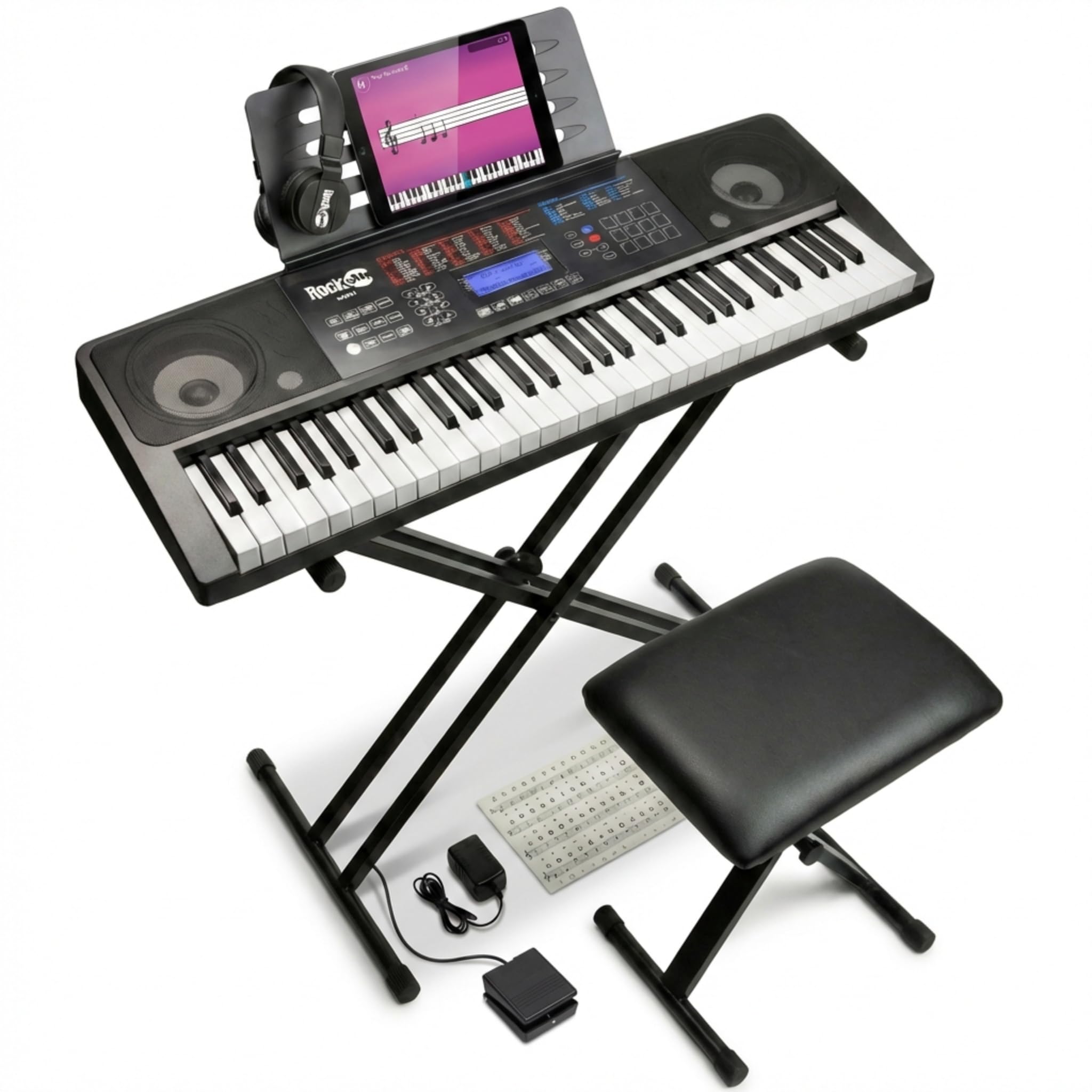
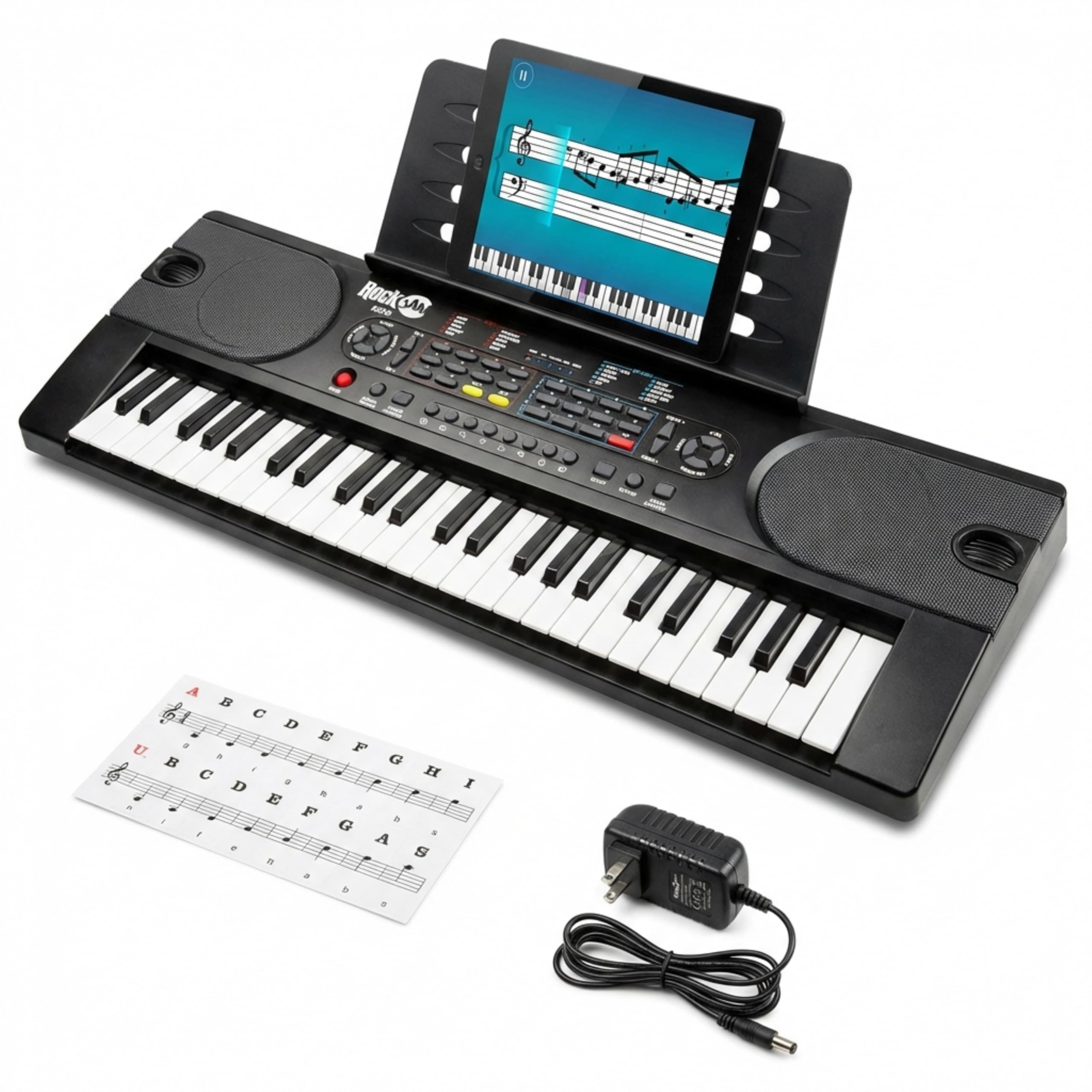
RockJam 61-Key Keyboard Piano Kit (With Bench)
RockJam

61-Key Keyboard Piano Kit (With Bench)

8.7
/ 10
Very Good

RockJam — UK best-selling beginner keyboard bundle. 61 keys, stand, stool, sustain pedal, headphones. Sound quality matches the price; the bundle savings are the value proposition.

Why we love it
  • Bundle includes sustain pedal
  • Complete starter kit
  • RockJam UK best-seller
  • Affordable family entry
Watch out for
  • Sound engine below Yamaha
  • Stand and stool basic
  • Sustain pedal is plasticky
Keys
61
Bundle
Keyboard + stand + stool + sustain + headphones
Brand
RockJam
Use case
Complete beginner kit
Price
Sub-£100
05
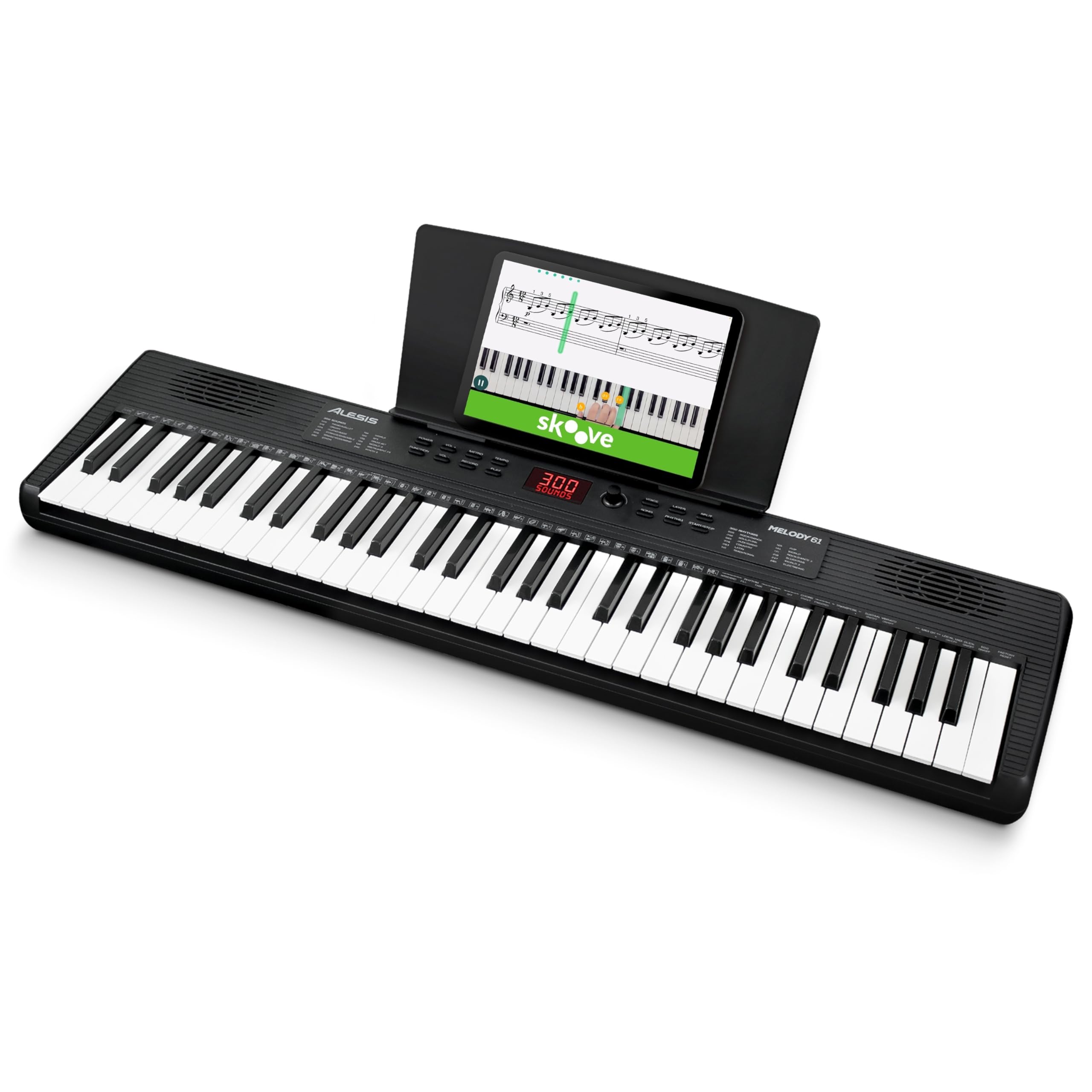
Alesis Melody 61 (Speakers + Lessons + Rhythms)
Alesis

Melody 61 (Speakers + Lessons + Rhythms)

8.2
/ 10
Good

Alternative Alesis Melody 61 variant — different bundle from #3. Built-in speakers, lessons, rhythms. Pick by current price and exact bundle contents.

Why we love it
  • Built-in lessons + rhythms
  • 61 keys touch-sensitive
  • Speakers included
  • Solid build
Watch out for
  • Bundle contents vary by SKU
  • Sound engine below Yamaha
  • Premium for Alesis at this size
Keys
61
Built-in
Lessons + rhythms + speakers
Brand
Alesis
Variant
Alt Melody 61 bundle
Use case
Beginner with built-in tuition
How to choose

Key count, touch sensitivity and the sound-engine question

Three considerations cover the electronic keyboard buying decision.

1.
61 keys vs 88 keys

61 keys: covers 5 octaves, enough for the first 2-3 years of learning, pop/rock/most beginner classical repertoire. Lighter, cheaper, more portable. 88 keys: full piano range, needed for serious classical study and any piece written for acoustic piano. Heavier, more expensive, harder to store. For absolute beginners or casual players: 61 keys. For learners aiming at piano lessons or grades: 88 keys.

2.
Touch-sensitive (velocity) keys

Touch-sensitive keys produce louder notes when pressed harder, quieter when pressed softly — fundamental to musical expression. Beginner keyboards (Yamaha PSR-F52, sub-£100 RockJam) often skip touch sensitivity to save cost. Mid-range (£100-£250) usually include it. Serious learners need touch-sensitive keys within their first year; cheaper non-sensitive keyboards become limiting fast. Don't compromise on this for any committed learner.

3.
Sound engine: Yamaha vs generic

Yamaha samples acoustic pianos in their own studios — the result is a sound library that's recognisably musical even on £80 keyboards. Generic brands (RockJam, no-name 'electronic keyboards') use lower-quality samples; piano voices sound 'plastic' and brass sounds buzzy. The sound quality gap is bigger than the price gap — buying Yamaha at sub-£120 is the value sweet spot. For RockJam, the bundle (stand, bench, headphones) sometimes justifies the lower sound quality for absolute starter use.

For most UK households starting a child on piano: Yamaha PSR-F52 (sound-quality led) or Alesis Melody 61 bundle (more accessories, slightly weaker sound). For serious learners: Alesis 88-key or step up to a digital piano (outside this list — Yamaha P-45, Casio PX-S1100).

06
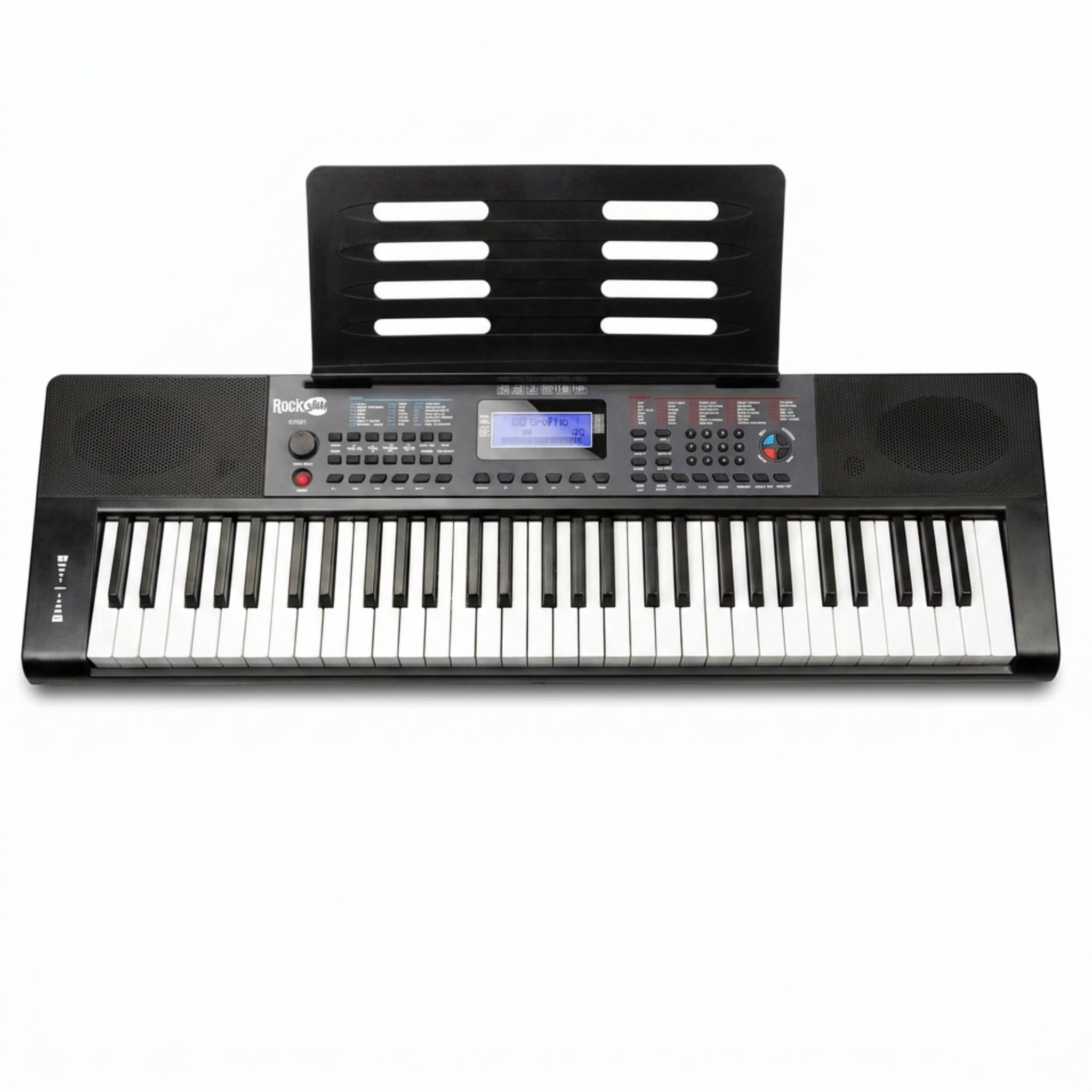
RockJam 61-Key Piano with Pitch Bend Wheel
RockJam

61-Key Piano with Pitch Bend Wheel

8
/ 10
Good

RockJam with pitch bend wheel — useful for pop/rock simulation (electric piano bends, synth-style vibrato). Includes power supply and stand. Step up from base RockJam kits.

Why we love it
  • Pitch bend wheel (synth/pop styles)
  • Power supply + stand included
  • 61 keys
  • Mid-budget pricing
Watch out for
  • Same RockJam sound quality
  • Pitch bend rarely used by classical learners
  • Stand basic
Keys
61
Pitch bend
Yes
Bundle
Keyboard + stand + power
Brand
RockJam
Use case
Synth / pop styles
07
RockJam 54-Key Piano with Power Supply
RockJam

54-Key Piano with Power Supply

7.6
/ 10
Good

RockJam 54-key — smaller chassis suitable for younger children or absolute starters. 54 keys is a compromise; learners will outgrow it within a year. Better as a Christmas gift than a long-term tool.

Why we love it
  • Smaller chassis for kids
  • Power supply + stand
  • Sub-£60 budget
  • Compact storage
Watch out for
  • 54 keys limits learning quickly
  • Smaller keys harder to develop technique
  • Sound quality limited
Keys
54 (smaller than full-size)
Brand
RockJam
Use case
Kids / starter
Price
Sub-£60
Lifespan as learner
12-18 months
08
RockJam 49-Key Piano (Compact)
RockJam

49-Key Piano (Compact)

7.4
/ 10
Fair

RockJam 49-key — even smaller than the 54-key #7. For very young children (under 8) or as a travel/secondary keyboard. Not suitable as a primary learning tool.

Why we love it
  • Smallest compact format
  • Suits very young children
  • Easy storage
  • Lightweight
Watch out for
  • 49 keys outgrown rapidly
  • Small keys hard for adult hands
  • Limited learning range
Keys
49
Brand
RockJam
Use case
Very young children / travel
Lifespan as learner
6-12 months
Price
Sub-£50
09
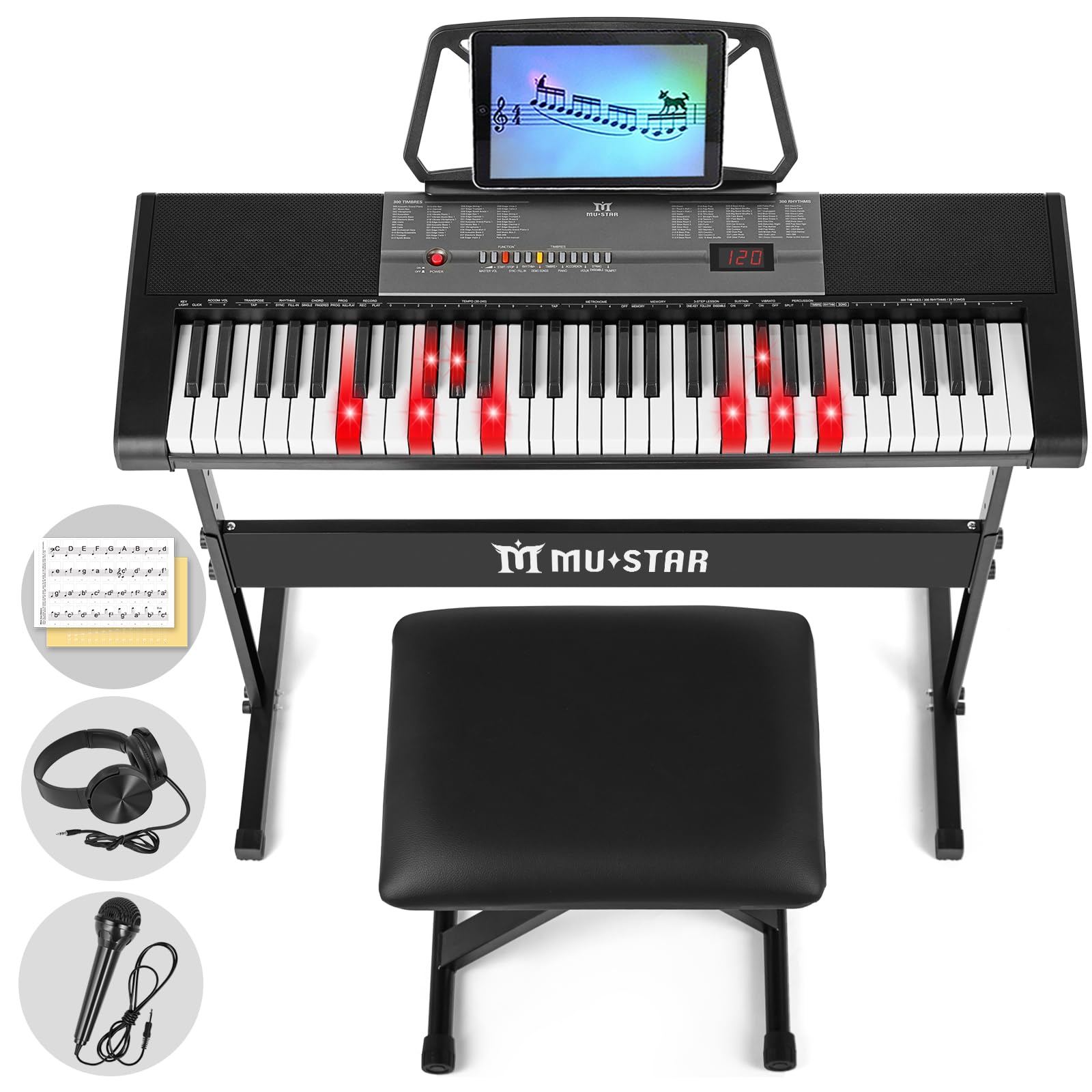
Generic 61-Key Electronic Keyboard (Lighted Keys, Stool, Mic)
Generic

61-Key Electronic Keyboard (Lighted Keys, Stool, Mic)

7.1
/ 10
Fair

Generic 61-key with light-up keys, LCD, headphones, X-stand, stool, music rest, microphone. Many features for the price. Light-up keys help absolute beginners locate notes; the trade-off is generic sound quality.

Why we love it
  • Light-up keys for learning
  • Full bundle (stand + stool + mic)
  • LCD display
  • Multiple teaching modes
Watch out for
  • Generic brand
  • Sound quality below Yamaha/Alesis
  • Many accessories quality basic
Keys
61 lighted
Bundle
Keyboard + stand + stool + mic + headphones
Brand
Generic
Use case
Gift / kids with light-up learning
Caveat
Sound below branded
Best Budget
10
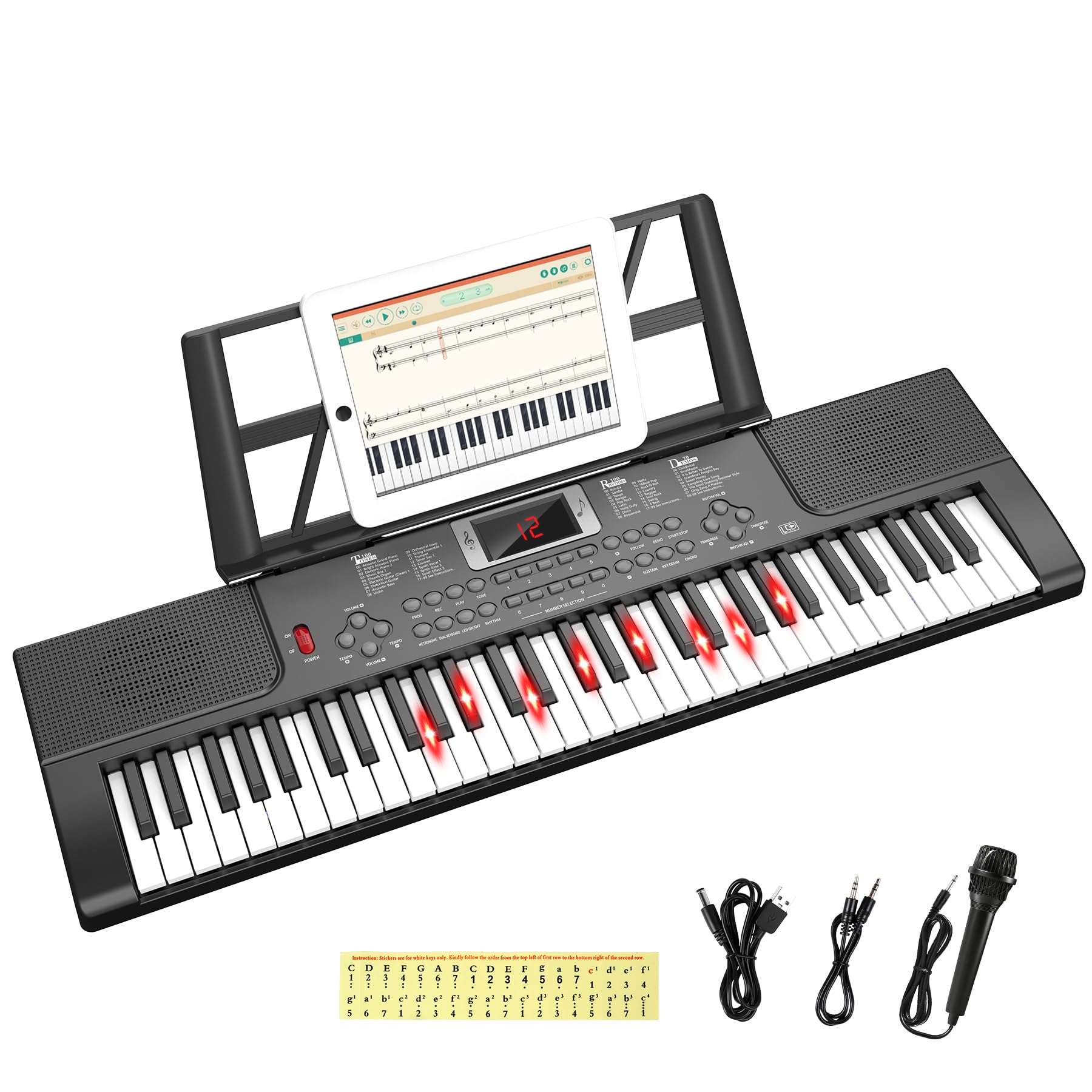
Shayson 61-Key Portable Keyboard (LED Light)
Shayson

61-Key Portable Keyboard (LED Light)

6.8
/ 10
Fair

Shayson 61-key — sub-budget tier with LED-lit keys. For first try of a keyboard before committing to a quality model. Don't expect long-term use.

Why we love it
  • Sub-budget pricing
  • LED-lit keys
  • Portable
  • 61 keys
Watch out for
  • Sub-Yamaha sound quality
  • Shayson generic brand
  • Lightweight chassis
Keys
61 with LED
Brand
Shayson
Price
Sub-budget
Use case
Trial / starter
Lifespan
6-18 months
The verdict

Yamaha PSR-F52 wins on sound; Alesis 88-key is the future-pianist pick.

The Yamaha PSR-F52 takes the top spot because Yamaha's sample library and sound engine outclass every competitor at the sub-£100 price point. 61 keys (not touch-sensitive — a budget compromise, but the right one for absolute beginners), built-in speakers, 114 voices and 158 styles. The right first keyboard for a child or adult starting piano learning.

For learners committed to piano specifically (rather than general keyboard play), the Alesis 88 Key keyboard is the smarter buy. Full piano range, touch-sensitive keys, 480 sounds, USB MIDI for connecting to a computer. The player won't outgrow the key count for years; learning weighted-key technique transfers directly to acoustic piano.

Below the £80 line, the picture splits between Alesis Melody 61 bundles (including stand, bench and headphones — useful for first purchases) and RockJam packages. They work for learning but the sound quality is noticeably below Yamaha. For absolute starters who aren't sure they'll stick with it, the bundles are fine; for committed learners, jump to the Yamaha tier.

Frequently asked

Common questions

61 keys or 88 keys for a beginner?
61 keys for absolute beginners (children, casual adults). 88 keys for committed learners who'll take piano lessons or grades. The first 1-2 years of learning use only the middle 4 octaves; 61 keys is enough. Step up to 88 keys when the student is ready for proper piano repertoire (Grade 1-2 onwards).
What is touch sensitivity and is it necessary?
Touch sensitivity (velocity-sensitive keys) means pressing harder produces louder notes. Essential for musical expression — it's how acoustic piano works. Beginner keyboards (Yamaha PSR-F52, sub-£100 RockJam) often skip it to save cost. Committed learners need it within their first year; non-sensitive keyboards limit musical development.
Yamaha vs Casio vs Alesis — which brand is best?
Yamaha: best sound engine (their pianos sampled in own studios), reference brand for sound quality. Casio: strong middle-ground, often best value at the £200-£400 step-up tier. Alesis: budget brand with surprisingly capable digital pianos, often the bundle pick. RockJam: cheapest, lowest sound quality, fine as gifts but not for committed learners.
Do I need headphones with a keyboard?
Strongly recommended. Headphone-only practice means the student can practice without disturbing the household; the household can ignore the student. Most decent keyboards include a headphone jack. Wired headphones (Sony MDR-7506, Audio-Technica ATH-M20x) are better for keyboard use than Bluetooth (which adds 100-200 ms latency — noticeable when playing).
Should I get a keyboard or a digital piano?
Keyboard: lighter, cheaper, more sounds (including non-piano), no weighted keys. Best for casual play, pop/rock, learning before committing. Digital piano: weighted keys that simulate acoustic piano feel, fewer sounds, designed for piano-specific learning. Best for serious learners taking lessons. Step up to digital piano (Yamaha P-45, Casio PX-S1100) when committing to formal piano study.
BP
About the editor

Best Products UK Editorial Team

Best Products UK is an independent UK product-review aggregator. Our editorial team synthesises hands-on reviews from leading UK consumer publications — Which?, Wired UK, T3, Tom's Guide UK, Trusted Reviews, TechRadar, Good Housekeeping, Expert Reviews, Stuff and others — into clear, ranked top-ten guides for UK shoppers. We do not run a physical test lab. We tell you which products UK reviewers agree on, where they disagree, and which the data says is right for your budget. Our methodology is published openly at /about/#methodology.