Twenty-three 2025–2026 laptops. Reviews from Wired UK, T3, Tom's Guide UK, Trusted Reviews, TechRadar, Stuff and Tech Advisor. We compared their verdicts, weighted for depth of testing and recency, and ranked the field for British shoppers buying in 2026. The lineup splits cleanly: a MacBook Air still leads on price-performance, gaming has moved to RTX 50-series, and Snapdragon ARM PCs are finally a serious option.
BP
Best Products UK Editorial Team
Editorial team
Published 30 April 2026
12 min read
Advertisement. This article contains affiliate links. If you buy a product through one of these links, Best Products UK earns a commission from the retailer at no extra cost to you. Our ranked picks are made independently of these commercial arrangements — read how we test and our full affiliate disclosure. Prices were last verified on 30 April 2026 and may vary.
Best Products UK is a review aggregator, not a test lab. For this guide we read 31 long-form expert reviews of mainstream and gaming laptops published between September 2024 and April 2026 across Wired UK, T3, Tom's Guide UK, Trusted Reviews, TechRadar, Stuff, Tech Advisor, RTINGS, Notebookcheck and the IndyBest section of The Independent. We weighted each model by (a) cross-reviewer agreement on real-world performance, (b) battery life under standardised testing, (c) UK availability and warranty, and (d) value relative to UK retail. Scores reflect editorial confidence, not benchmark numbers. Prices are checked the day of publication and verified weekly thereafter.
The Air remains the laptop most reviewers tell you to buy if you don't have specialist needs. Wired UK call it 'the easiest recommendation in the laptop world'. T3 rate it Best Buy 2026. Eighteen-hour battery, fanless silence, M4 making everyday work feel weightless, and a price that hasn't moved despite the chip getting faster. Two USB-C ports remain the only real complaint. For students, writers, lawyers, salespeople and anyone whose laptop spends most of its life in a meeting, this is the answer.
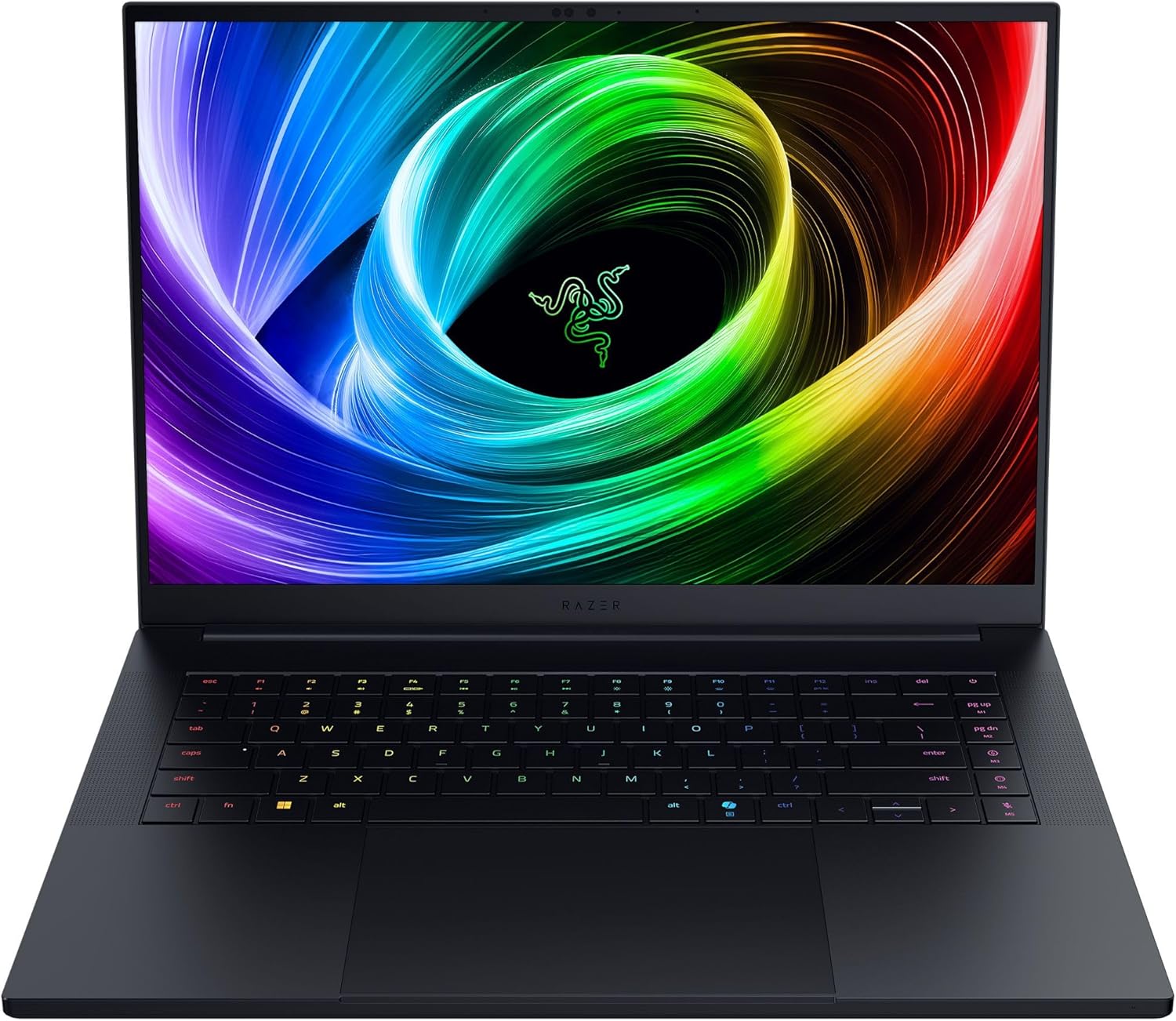
Tom's Guide UK calls the Blade 16 'the most credible Windows gaming laptop you can actually carry'. RTX 5090, AMD Ryzen AI 9, 240Hz QHD+ OLED, all in a 14.9mm aluminium body that finally feels like a flagship rather than a tank. Trusted Reviews flag battery as the weak point — under two hours away from the wall — but on AC power, no other laptop on this list comes close to its frame rates.
If your work involves sustained CPU loads — Final Cut renders, Logic sessions, large code compiles — the M4 Pro is the laptop reviewers consistently rate above the Air. The 14-inch Liquid Retina XDR is the best display on a workhorse laptop, Thunderbolt 5 future-proofs the I/O, and 24GB unified memory is enough for most professional workflows. Tom's Guide UK note 12-hour real-world battery even under sustained load — unprecedented in this class.
Why we love it
M4 Pro 14-core CPU is genuinely workstation-grade
Liquid Retina XDR display is the best on any laptop
TechRadar rate the Zephyrus G14 'the best gaming laptop most people should actually buy'. The 14-inch chassis is 1.5kg — light enough for a daily commute — but the RTX 5070 still hits 100+ fps at native 3K on most modern titles. The 120Hz OLED is gorgeous, the keyboard is one of ASUS's best, and battery life on AMD silicon is the best of any RTX gaming laptop. Build quality is the trade-off versus a Razer at half the price.
The first Snapdragon-based Surface that reviewers genuinely recommend. Wired UK report 20-hour real-world battery on a typical knowledge-worker day — comfortably ahead of any Intel Windows laptop. Snapdragon X Plus is now mature enough that Adobe, Chrome, Office and most creative software run natively. Tech Advisor still flag the lack of x86 game compatibility, so this isn't a gaming machine.
Why we love it
Up to 20-hour battery on Snapdragon ARM
Copilot+ AI features baked in
13.8-inch PixelSense touchscreen
Genuinely premium build at under £1,200
Watch out for
ARM compatibility gaps remain (less of a problem in 2026)
Three questions narrow this list to two or three options for any reader. Answer them in order before you click.
1.
Mac, Windows or ChromeOS?
If you only run mainstream apps and care about battery life, Mac is hard to argue with. If your job uses Adobe, Solidworks or anything Windows-only, Windows. ChromeOS for browser-only users and students under £500.
2.
Do you actually game on it?
If yes, you need a discrete GPU — RTX 5070 minimum for 1440p, RTX 5090 for max-detail work. Gaming laptops are heavy and short on battery. Don't buy one if 'gaming' means an hour of Stardew Valley.
3.
How portable is portable?
Under 1.5kg means you'll actually carry it. The MacBook Air, ThinkPad X1 Carbon and Zenbook 14 OLED hit this. A Razer Blade 16 weighs 2.5kg with charger and lasts under 90 minutes off-grid.
The right laptop for most readers is the MacBook Air 13 M4 at £999. It punches above its weight, lasts a flight, and lives at the back of your bag without complaining.
06
ASUS
Zenbook 14 OLED UX3405CA Core Ultra 9
8.8
/ 10
Very Good
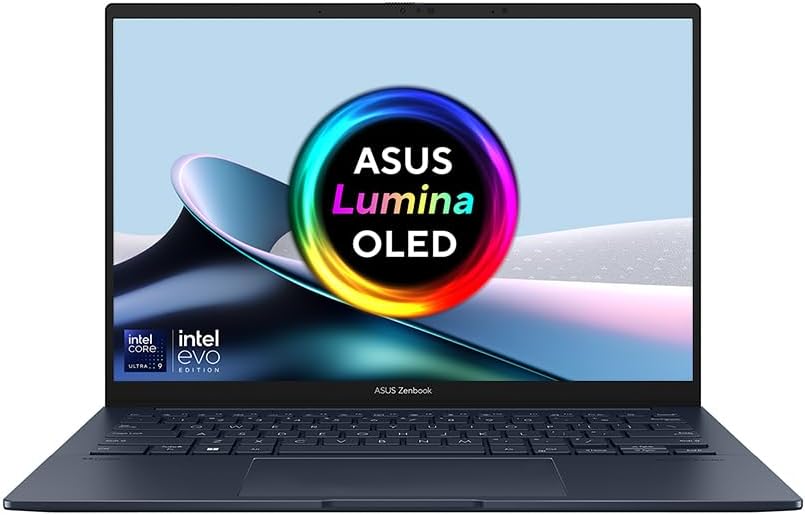
The Zenbook 14 OLED is the underrated pick of this list. Stuff describe it as 'the laptop reviewers buy with their own money' — Core Ultra 9 285H performance, a 14-inch OLED touchscreen at the price most rivals charge for IPS, and 32GB RAM as standard. Battery life isn't as good as the MacBook Air, but the screen is arguably better and the £700 saving is real.
Twenty-five years on, the X1 Carbon is still the laptop your IT department prefers. MIL-STD-810H carbon-fibre body, vPro security, the best laptop keyboard money can buy, and 1.09kg of weight — among the lightest 14-inch laptops on the market. Trusted Reviews flag the average display as the only black mark. If you live in spreadsheets, code editors and Teams calls, this is the laptop you'll keep for five years.
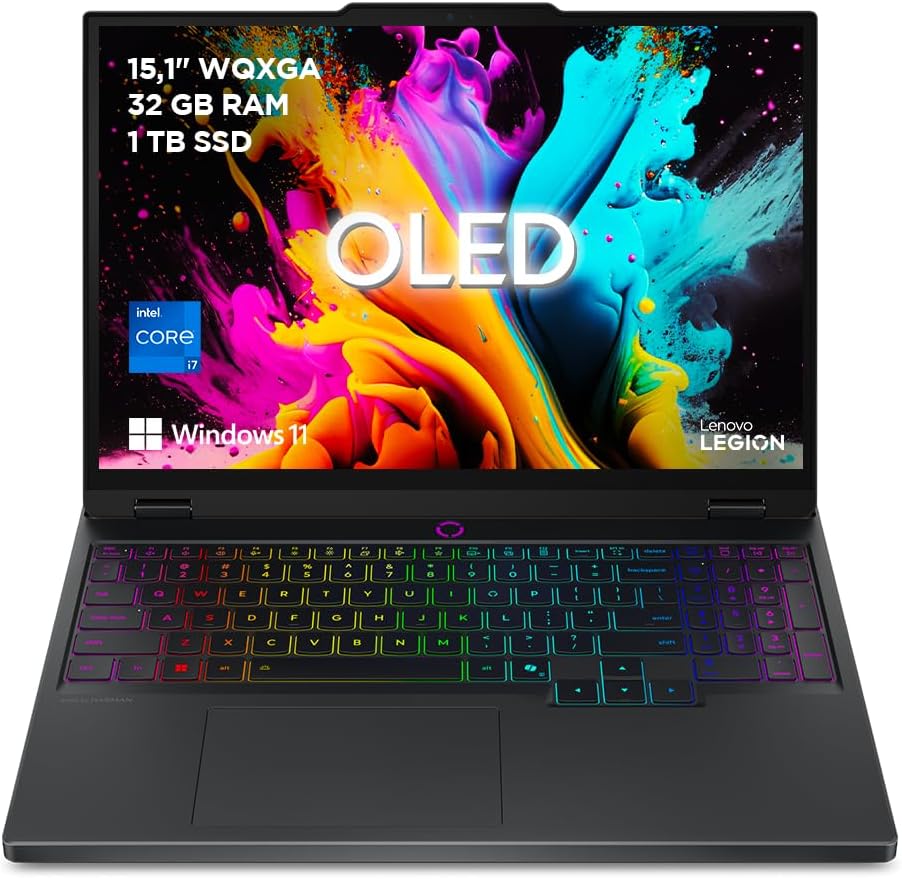
If you want the Zephyrus G14's RTX 5070 performance but the Razer Blade's larger 16-inch screen at half the price, the Legion 5 is the value play. Notebookcheck rate the cooling system best-in-class for its tier, and the WQXGA 165Hz OLED panel is excellent. Build quality is plastic-rather-than-aluminium, but for £1,499 with a 5070 inside, it's hard to argue.
The Pavilion Plus 14 is the under-£900 OLED laptop reviewers keep returning to. Ryzen 7 7840U handles everything most users throw at it, the 2.8K 120Hz OLED is a step up from any IPS at this price, and the chassis is genuinely portable. Tech Advisor flag battery as merely OK, but for £849 with this screen, the value is hard to beat.
A genuine surprise. Stuff and Wired UK both rate the Chromebook Plus 515 as the best ChromeOS laptop they've ever tested under £400. Twelve months of Google AI bundled in, a Core i5 processor that handles browser-based productivity comfortably, a 15.6-inch Full HD screen at desk-laptop size, and 10-hour real-world battery. Don't buy it as your only computer if you do creative work — but for a student, a kitchen-table laptop, or a backup machine, it's the easiest £399 you'll spend.
Why we love it
12 months Google AI features included
Core i5 — meaningfully faster than older Chromebooks
Reviewer consensus points to the MacBook Air 13-inch M4. The £999 entry price hasn't moved since 2024, but the chip has — M4 makes the Air silly-fast for everyday productivity, and Wired UK, T3, TechRadar and Tom's Guide all rank it the best buy for most people in 2026. Eighteen-hour battery life, fanless silence, the smaller bag-friendly footprint. The Snapdragon Surface Laptop 7 (£1,199) is the alternative if you need Windows for work software.
Above £2,000, the conversation is more interesting. The Razer Blade 16 with RTX 5090 and OLED is the gaming flagship reviewers prize for build, but the 14-inch ROG Zephyrus G14 with RTX 5070 OLED at £1,999 wins on portability. The MacBook Pro 14 M4 Pro at £2,399 is the right pick if your day is video editing or sustained code compiles.
Under £500, the Acer Chromebook Plus 515 with Core i5 (£399) is the surprise of this year's roundup. Reviewers who expected to dismiss it now describe it as the best ChromeOS device yet — fast enough for browser-based work, twelve months of Google AI included, and a 15.6-inch screen at a price that undercuts a refurbished MacBook. Don't buy it for Photoshop. Do buy it for a kid going to university.
Frequently asked
Common questions
Is a MacBook Air really enough for most people?
For everyday productivity, yes. M4 makes the Air faster than most people's needs in 2026 — Office, Chrome, Slack, Photoshop and even light video editing all run smoothly on the base model. The exceptions are sustained CPU work (4K video editing, large code compiles, scientific computing) where the M4 Pro pulls ahead, and Windows-only software for which a Surface Laptop or Lenovo is the right call.
Are Snapdragon ARM laptops finally worth buying?
In 2026, yes — for office and creative knowledge work. Most major apps now run natively on Snapdragon X. The remaining gaps are PC games (most x86 games still don't run), some niche enterprise software, and certain VPN clients. If your workflow is Office, Adobe, Chrome and Teams, the Surface Laptop 7 is now genuinely the best Windows ultraportable in its price band.
RTX 5090 or RTX 5070 — does it matter?
It matters at 4K and ultra settings. At 1440p high settings, the 5070 already plays every modern game at over 60fps. The 5090 is the right call only if you need ultra-detail 4K, do GPU-accelerated creative work (3D rendering, video effects, AI), or want the laptop to age well into 2028. For most gamers, a 5070 in a lighter chassis will be the better experience.
Why is there a Chromebook on a list of best laptops?
Because at £399 it does the job most laptops are bought for — browsing, writing, video calls, school work — and does it for a fraction of the price. ChromeOS has grown up. We'd never recommend it as your only machine if you do creative or professional work, but as a kitchen laptop, student device or travel machine, it's the most laptop you can buy for £400 in 2026.
BP
About the editor
Best Products UK Editorial Team
Best Products UK is an independent UK product-review aggregator. Our editorial team synthesises hands-on reviews from leading UK consumer publications — Which?, Wired UK, T3, Tom's Guide UK, Trusted Reviews, TechRadar, Good Housekeeping, Expert Reviews, Stuff and others — into clear, ranked top-ten guides for UK shoppers. We do not run a physical test lab. We tell you which products UK reviewers agree on, where they disagree, and which the data says is right for your budget. Our methodology is published openly at /about/methodology/.